
Out-of-State Car Insurance — South Dakota
Free to compare
When You Buy a Car Out of State
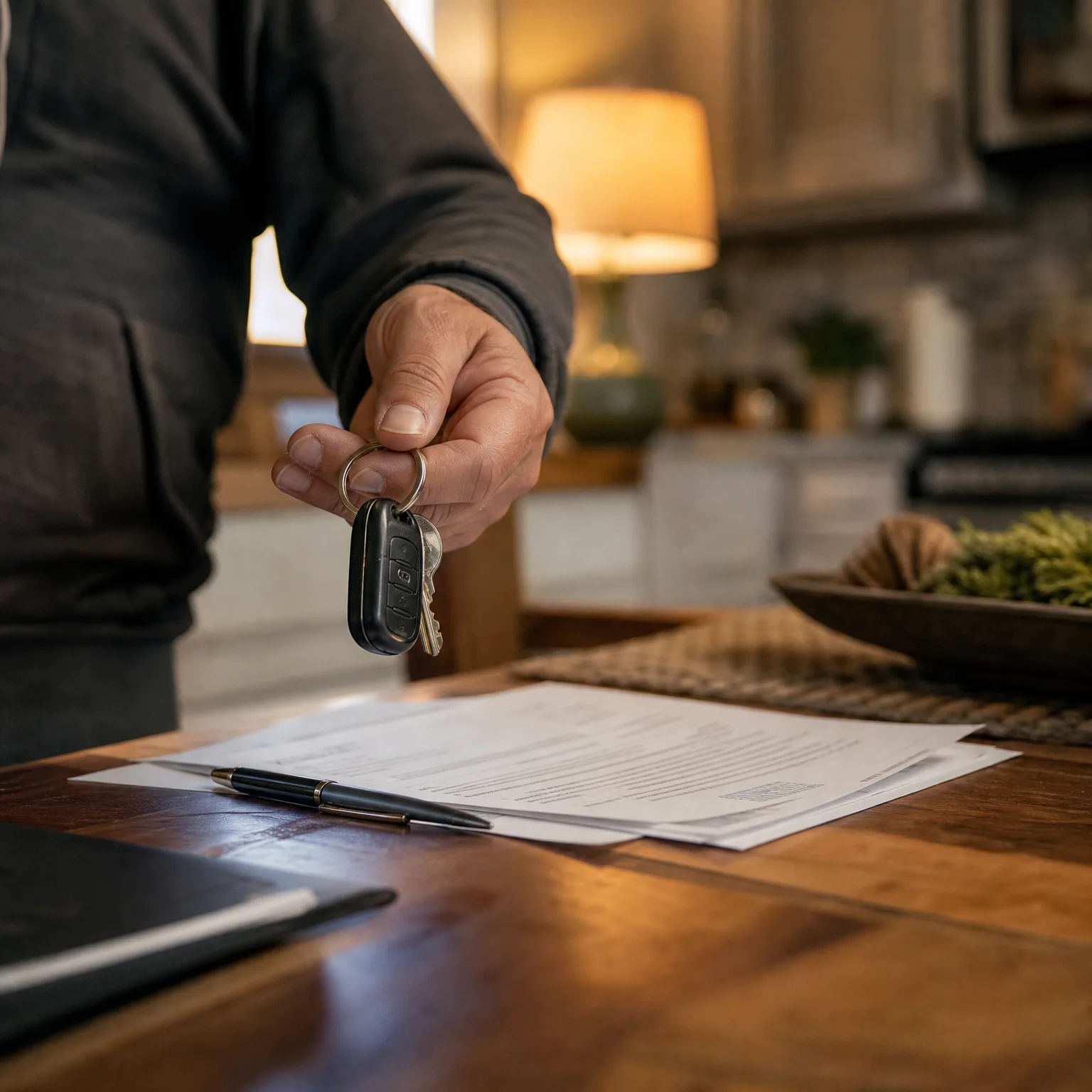
You bought a car in Minnesota, Iowa, or Nebraska and now need to register it in South Dakota. The dealer handed you temporary tags from the purchase state, a bill of sale, and the title. Your existing South Dakota auto policy covers the two vehicles you already own, but the new car isn't on it yet. You're not sure if your current policy automatically extends to the out-of-state purchase during the drive home, or if you need to call your carrier before you leave the lot.
South Dakota law requires proof of insurance before the county treasurer will issue permanent plates. The temporary tags from the purchase state give you a narrow window to complete registration, but your insurance coverage doesn't automatically follow the car across state lines unless you notify your carrier and add the vehicle to your policy. Most carriers extend a grace period—typically 14 to 30 days—during which a newly acquired vehicle is covered under your existing policy, but that protection applies only if you already carry collision and comprehensive on at least one vehicle. If your current policy is liability-only, the grace period may not cover physical damage to the new car, and some carriers require notification within a specific number of days to honor the grace coverage at all.
“The grace period begins the moment you take possession, not when you notify the carrier—and missing the notification deadline can void coverage retroactively.”

Check Your Rate Against Other South Dakota Drivers
Get My South Dakota Car Insurance Quote$25,000 / $50,000 / $25,000
South Dakota Minimum Liability
South Dakota requires $25,000 bodily injury per person, $50,000 bodily injury per accident, and $25,000 property damage. These minimums apply to every vehicle you register, including an out-of-state purchase once you bring it home.
South Dakota state minimum liability (auto_insurance_state_data)
What Your Current Policy Covers During the Grace Period
Your existing South Dakota policy extends coverage to a newly acquired vehicle for a limited time, but the scope of that coverage depends on what you already carry. If your current policy includes collision and comprehensive on at least one vehicle, most carriers automatically extend the same coverages to the new car for 14 to 30 days from the date of purchase. During that window, the new vehicle is covered at the same limits and deductibles as your existing car. If you carry only liability coverage on your current vehicles, the grace period typically extends only liability protection to the new car—collision and comprehensive do not apply, and any damage to the new vehicle during the drive home or the registration period is not covered.
The grace period begins the moment you take possession of the vehicle, not when you notify the carrier. If you wait until after the grace window closes to report the purchase, the carrier may deny coverage for any incident that occurred during the unreported period, even if the incident happened within the calendar grace window. Some carriers require you to add the vehicle within a specific number of days—often 14 or 30—to preserve the grace coverage retroactively. If you miss that notification deadline, the carrier may apply coverage only from the date you reported the vehicle forward, leaving a gap between purchase and reporting.
Uninsured motorist coverage, required in South Dakota, extends to the new vehicle during the grace period if you already carry it on your existing policy. Personal injury protection is not required in South Dakota, so if you do not carry it on your current policy, it will not extend to the new car unless you add it when you report the vehicle.

If you do not notify your carrier within the grace period, coverage for the new vehicle may apply only from the date you report it forward, leaving a gap that can void a claim filed during the unreported window.
Related Articles


Registration and Proof of Insurance
South Dakota requires proof of insurance before the county treasurer will issue permanent plates. You must present an insurance card or electronic proof showing the new vehicle's VIN, your name as the policyholder, and coverage that meets South Dakota's minimum liability limits: $25,000 bodily injury per person, $50,000 bodily injury per accident, and $25,000 property damage. The proof of insurance must show the vehicle is covered under a South Dakota policy or a policy issued by a carrier licensed to write coverage in South Dakota. If you registered the vehicle in the purchase state and are transferring the registration to South Dakota, the out-of-state insurance card will not satisfy the South Dakota proof requirement—you must provide proof from a South Dakota-compliant policy.
The county treasurer will not accept a binder or a pending-coverage letter. The insurance card must show active coverage. If you added the vehicle to your policy after the purchase date, the card will show coverage effective from the date you reported the vehicle, not the purchase date. If that effective date is after the temporary tag expiration, you may face a registration delay or a requirement to obtain a new temporary permit from the South Dakota DMV while you resolve the coverage gap.
South Dakota does not require a vehicle inspection for out-of-state purchases, but the county treasurer will verify the VIN on the title matches the VIN on your insurance card. If the VIN does not match, registration will be denied until you correct the discrepancy with your carrier. Most carriers issue an updated insurance card within 24 hours of adding a vehicle, but some require 48 to 72 hours. Plan to add the vehicle to your policy at least three business days before your temporary tags expire to ensure you have proof of insurance in hand when you visit the county treasurer.
679,711
South Dakota Licensed Drivers
South Dakota has 679,711 licensed drivers and 1,364,513 registered vehicles, meaning many households insure multiple cars. Adding an out-of-state purchase to an existing multi-car policy preserves the multi-vehicle discount and avoids the higher per-vehicle cost of a separate policy.
South Dakota state insurance statistics (state_insurance_stats, 2022)

When the Purchase State's Insurance Doesn't Transfer
If you bought the car from a private seller in another state and the seller's insurance covered the vehicle up to the sale date, that coverage does not transfer to you. The seller's policy protects the seller, not the buyer, and terminates when the title changes hands. You are responsible for insuring the vehicle from the moment you take possession, even if you are still in the purchase state. If you drive the car home without adding it to your South Dakota policy or obtaining temporary coverage, you are driving uninsured, and any accident during the drive home will not be covered by the seller's policy or by your existing South Dakota policy if you are outside the grace period or do not carry collision and comprehensive.
Some buyers assume the dealer's insurance or the temporary tags provide coverage during the drive home. Temporary tags are a registration placeholder, not insurance. The dealer's liability coverage protects the dealership, not the buyer, and applies only while the vehicle is on the dealer's lot or during a test drive. Once you sign the purchase agreement and take possession, the dealer's coverage no longer applies. If you financed the vehicle, the lender may require proof of insurance before releasing the car, which forces you to add the vehicle to your policy or obtain a separate policy before you leave the dealership. If you paid cash, no one will stop you from driving off the lot uninsured, but you are liable for any damage or injury you cause, and South Dakota will suspend your license if you are caught driving without insurance.
Compare Carriers Before You Add the Vehicle
Adding an out-of-state purchase to your existing policy is the simplest path, but it is not always the cheapest. The new vehicle re-rates your entire policy, and if the car is significantly more expensive or higher-risk than your current vehicles, the premium increase may be large enough to justify shopping for a new carrier. South Dakota has 19 carriers writing auto insurance in the state, and many offer multi-car discounts that apply when you insure two or more vehicles on the same policy. If you already insure two cars and are adding a third, the multi-car discount will apply to all three vehicles, but the total premium will still increase because you are adding coverage for another car. If the increase pushes your premium above what a competitor would charge for all three vehicles, switching carriers before you finalize the addition can save money over the life of the policy term.
Request quotes from at least three carriers before you add the vehicle. Provide the VIN, purchase date, and the coverage levels you plan to carry. Ask each carrier how they calculate the multi-car discount and whether the discount applies to all vehicles or only to the second and subsequent cars. Some carriers apply a percentage discount to each vehicle after the first; others reduce the total policy premium by a flat amount. A smaller discount on a lower base rate can beat a larger discount on a higher base rate, so compare the total premium for all vehicles, not just the per-vehicle cost. If you switch carriers, cancel your old policy effective the date the new policy begins to avoid a coverage gap and to preserve the multi-car discount on the new policy.
Adding the Vehicle to Your Policy
Call your carrier or log into your account as soon as you take possession of the vehicle. Provide the VIN, make, model, year, purchase date, and the address where the car will be garaged in South Dakota. The carrier will add the vehicle to your policy effective the purchase date if you report within the grace period, or effective the date of your call if you report after the grace window closes. Most carriers allow you to complete this step by phone or online; a few require you to submit the title or bill of sale before coverage binds. If you financed the vehicle, the lender will require collision and comprehensive coverage, and the carrier will add those coverages when you report the vehicle. If you paid cash and your current policy is liability-only, you can choose to add collision and comprehensive or keep the new car at liability-only, but the grace period collision and comprehensive protection—if it applied at all—ends once you finalize the addition.
Adding the vehicle re-rates your entire policy. The carrier recalculates your premium based on the new vehicle's value, your driving record, the garaging address, and the coverage levels you select. If you already insure multiple vehicles, the multi-car discount applies to the new vehicle immediately, but the total premium will still increase because you are adding a third or fourth car to the policy. The new premium takes effect on the date the vehicle is added, and the carrier will bill you for the pro-rated increase through the end of your current term. If the new vehicle is financed and you did not previously carry collision and comprehensive on any vehicle, the premium increase will be larger because the carrier is adding those coverages for the first time.
Get Your Free Quote
Get My South Dakota Car Insurance QuoteFrequently Asked Questions
Does my South Dakota car insurance automatically cover a car I buy in another state?
Your existing South Dakota policy extends coverage to a newly purchased vehicle for a grace period—typically 14 to 30 days—but only if you already carry collision and comprehensive on at least one vehicle. If your current policy is liability-only, the grace period extends only liability coverage, not physical damage protection. You must notify your carrier within the grace window to preserve coverage retroactively; if you report the vehicle after the grace period ends, coverage may apply only from the date you report it forward.
How long do I have to add an out-of-state car to my South Dakota policy?
Most carriers give you 14 to 30 days from the purchase date to report a newly acquired vehicle and preserve grace-period coverage. The exact window depends on your carrier and is stated in your policy documents. If you miss the notification deadline, the carrier may apply coverage only from the date you report the vehicle, leaving a gap between purchase and reporting that can void a claim filed during the unreported period.
What proof of insurance does South Dakota require to register an out-of-state car?
South Dakota requires an insurance card or electronic proof showing the vehicle's VIN, your name as the policyholder, and coverage that meets the state's minimum liability limits: $25,000 bodily injury per person, $50,000 bodily injury per accident, and $25,000 property damage. The proof must come from a South Dakota policy or a carrier licensed to write coverage in South Dakota. The county treasurer will not accept a binder, pending-coverage letter, or out-of-state insurance card.
Can I drive an out-of-state car home to South Dakota without insurance?
No. You are required to insure the vehicle from the moment you take possession, even if you are still in the purchase state. Temporary tags are a registration placeholder, not insurance, and the seller's or dealer's coverage does not transfer to you. If you drive the car home without adding it to your South Dakota policy or obtaining temporary coverage, you are driving uninsured, and any accident during the drive will not be covered.
Does adding an out-of-state car to my policy increase my premium?
Yes. Adding a vehicle re-rates your entire policy based on the new car's value, your driving record, the garaging address, and the coverage levels you select. If you already insure multiple vehicles, the multi-car discount applies to the new car, but the total premium will still increase because you are adding another vehicle to the policy. The increase is pro-rated through the end of your current term, and the carrier will bill you for the difference.
Should I shop for a new carrier before adding an out-of-state car to my policy?
If the out-of-state purchase is significantly more expensive or higher-risk than your current vehicles, the premium increase may be large enough to justify comparing quotes from other carriers. Request quotes for all your vehicles from at least three carriers and compare the total premium, not just the per-vehicle cost. If a competitor offers a lower total premium for all your vehicles, switching carriers before you finalize the addition can save money over the policy term.